|
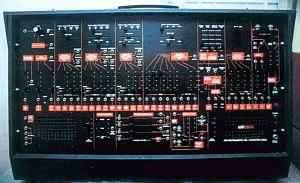
I got tempted and bought two of these beasts, both "grey meanies", I think, back in the eighties, where they sold for 1000 euros or even less... Now you might pay 3000 for one.
Hm, of course these are great synths. The most versatile semi-modulars you could lay fingers on - back then and maybe even know. The owners manual, I remember, was designed as a kind of school book in synthesis, which was great.
The big drawback of these instruments were the fact that you could not memorize the interesting settings you made. I remember the endles complexity of making and photocopying sound sheets (this was the days before sampling)and then the dilemma you faced when you found an interesting sound (this instrument is "full" of interesting sounds) - either you had to let it go - or to spend endless time to try and write it sound correctly on the sound sheets. Can you even imagine, folks, what trouble we went through back then ????
This became a problem with this instrument - especially when owning two, as I did. It was, as Brian Eno puts it, like getting a new wonderfully fascinating instruments in your hands every two minutes - it ended up becoming distracting to say the least, eventually ruining the creative process - coz all the fascinating sounds you lost for ever, if you did not write them down...
This made it a very complex and somewhat unintuitive instrument to work with, if you wanted to use it as more than a complex solo synthesizer.
What was it really - a solo synth or a complex sound effects machine - I think, except in the studio, it was a synthesizer that did not really know - maybe became caught by it´s own lack of limitation - very unlike ARP, by the way, a company that usually produced synths which stood out because of their DESIGNED limitations so to speak.
Here I remember a quotation from Brian Enos Oblique Strategies: "honour your mistake as a hidden intention".
Maybe this is the key to work creatively with the 2600 ????
L. Smith
|