|
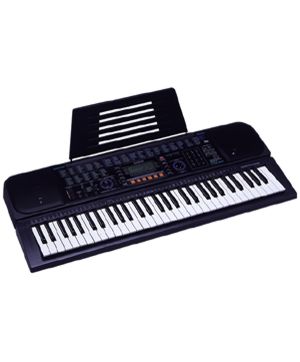
I bought my unit around January of 1999, having already a CTK-601 (the same, except for the backlit LCD), for around 300 €. The relationship quality/price of this synthesizer is good: having a GM unit with operable user section to create new sounds, an onboard sequencer and a MIDI velocity-sensitive keyboard in one unit is unbeatable at this price. The often-commented betterable sounds are due, in my opinion, to two factors: some sounds are apparently "lifted" from some professional synthesizers (at least I hear some exact sounds in my Korg 05R/W unit), and all of them are compressed (like mp3) with a betterable algorithm (the D/A conversors could be better as well). Understood, this is a PCM synthesizer based on ROM samples of instruments (like many other synthesizers, although our unit performs better than others in its segment). Two of the presets are remarckable, anyway: the fast strings (048), more realistic in orchestration contexts than the ones in far more professional synthesizers, and the french horn (069), well found. The keyboard (the main reason I first approached the CTK-601/611) is very interesting. The main MIDI features (local, velocity, GM function, SysEx...) are present, what make the unit for a useful and good-for-price MIDI controller. The only serious drawbacks are the pitch-bend buttons, not enough if you have used sometime a pitch-bend wheel, and the far-from-fine adjust of velocity sensitivity (but remember: a not spoken wonderful feature of the CTK-601/611 is a button that permits you to leave the keyboard velocity to a permanent MIDI value of 090, stabilizing the performance volumes of the unit. Ideal for organists). There isn't aftertouch, too, but it can be expecting too much for the price, and most of the users don't need it for sure. The most interesting part of the CTK-611 is the sequencer. 6 tracks can seem not enough for some complex arrangements, but remember: the CTK-611 has 24 notes-poliphony (and some preset sounds use 2 voices for each note), enough for playing and simple sequencing, but bettered in professional uses (or in PC sound cards!). In every case, you can make all 16 MIDI channels sound (with the channel 10 saved for percussion: the CTK-611 has 8 ROM sets, not modifiable) from an external sequencer, making it enough for most users. The synthesis capabilities of the CTK-611, although limited (selecting one or two sample waves and assign volume-envelope, stereo and pitch values, basically), can result in beautiful sounds without much effort. Remember to mantain the power supply to not loose all user sounds in memory. You can, in the worst case, send them to an external sequencer (and record them!) through MIDI SysEx. Ending, the user operativity of the CTK-611 is fantastic. The user can "take" the unit in very few minutes (the manual is excellent as well). Overall, I'd reccomend this keyboard to most home and lower professional keyboardists in need for a well-featured-for-price keyboard for live or domestic uses. High professional users probably will not find it useful. But I have used much this synthesizer in my own 8-track recordings, and I have some more professional units...
|