|
Sorry man, I did actually think that was fairly open ended -- leaving loads of room for improv, obviously you're the type who's glass is always half empty. Baseless criticism is a waste of our time.
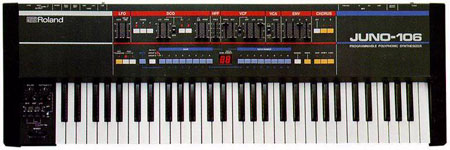
With that said, the 106 is the plain vanilla of keyboards -- nothing too special aside from having a slider for all the parameters which can be doodled with real time. DCO osc's, single enevelope, single lfo, one type of noise (white), chorus effect(noisy), polyphonic portamento (really cool), osc sync (all 6 produce one note, ie. stacked, sounds much better, fat if you like.)
The bad: Crappy IC's go out, you will probably lose a voice if you own your 106 for more than a couple of years, poor construction and design caused this, I've replaced my voice chips on two seperate occasions, which is a real bummer, they're not expensive to fix, but when you have a gig in a week and it takes them 6 to 8 weeks to fix your board its a real bummer. Noisy volume control, noisy chorus, weird midi response some times, seems as though the midi implentation on the 106 is slow, don't expect 480 tpqn resolution from the 106 it isn't going to happen, so fast parts can sound really sloppy especially with portamento engaged -- this can be overcome but can be a real pain in the but too. Sounds really pale in comparison to my Juno-6, much more mettalic sounding, kind of thin in poly mode, stack the osc's for a bigger sound. If this sounded as good as a Juno-6/60 it would be amazing, it simply isn't as full as the aformentioned other juno's, but has a unique timbre of it's own, really suited for industrial music me thinks, sounds can be very hard and angular.
Great place to start out on analog synthesis, good external design makes for easy easy editing on the fly, cheap price, easy to fix but factor in frequent repairs for bad voice ic's, no manual required, plenty of patch storage, all in all a good keyboard -- but not the god-send people make these out to be.
|