|
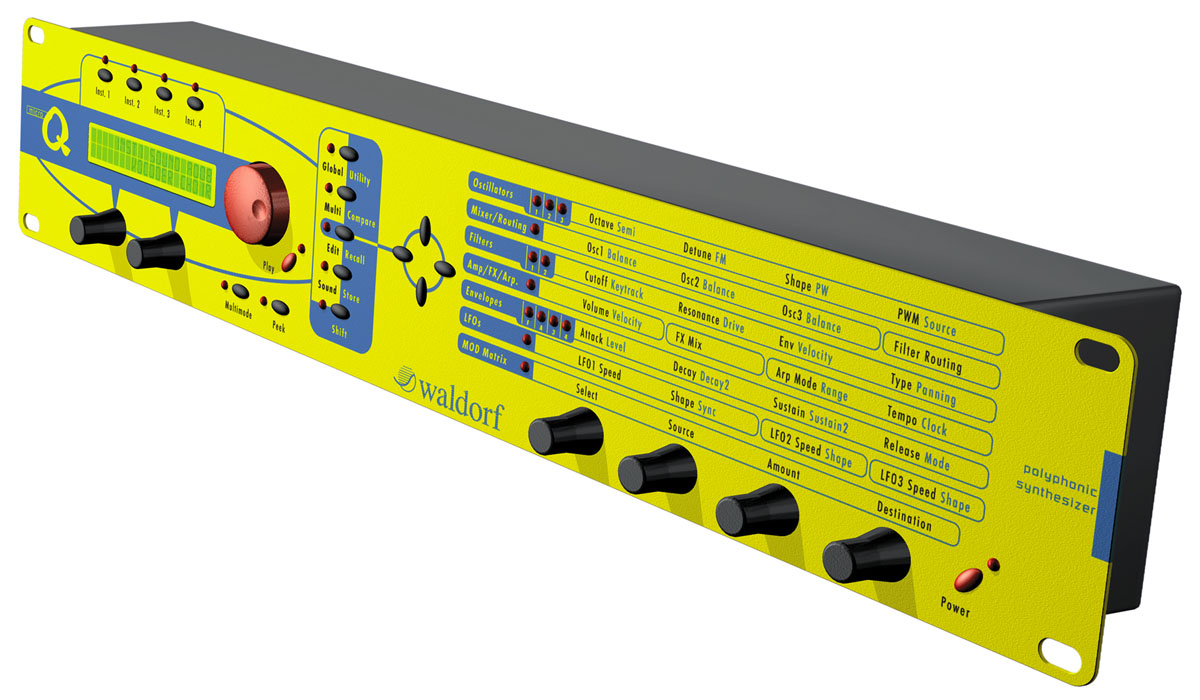
Waldorf Micro Q Keyboard, O/S 2.14
I’ve never owned anything by Waldorf before this… I had heard many good things concerning the Microwave XT and the Q, and I had played around with a pulse, but most of the bigger machines were kinda pricey, and I figured I had enough analogue synths.
I was looking for a decent polysynth, which would allow me to create lush atmospheric pads etc, and keep me busy programming wise. I haven’t played keyboards in a while, and I thought this would be a good break from all the tabletop sequencer/synth boxes I’ve been playing with of late.
The Micro Q Keyboard impressed me from the first time I saw and touched it. Kudos to Waldorf for the user-friendly controls, the nice rubber wheels, the INTERNAL power supply, and nice feeling keyboard. More importantly, this unit is built like a tank. Good design all around, everything on the Micro Q screams quality, including the sounds.
What’s really interesting here is that you have a basic Minimoog style layout in terms of components, but thanks to the built-in modulation matrix, you can create the kind of patches you would normally expect out of a well-featured FM synth, or even classic Oberheim machines such as the X-Pander etc. The sounds are loud and deep, and have incredible range, from short aggressive percs to lush endless clouds of drones. Furthermore I really enjoyed tweaking the arpeggiator, which gives you more options than usual, including rhythmic structuring, and programmable glide.
The effects in O/S 2.14 are a vast improvement over those found on the previous incarnation on the Micro Q. The reverb is good enough to add dimension to the sound, and I’m sure I’ll enjoy the 5.1 delay if I ever make my studio a real film post production facility. The search engine is a nice addition, although most of the sounds I have made using the Micro Q are in the “?” category.
As far as preset sounds are concerned, I’ve never been a fan of them, but there are exceptions to this rule, and Waldorf’s factory patches are the exception. They were right to add the initials of the programmers next to the sound names, as each sound reflects that a great amount of care has been taken in creating it. As a huge John Carpenter fan, I was pleasantly surprised to find a patch called “The Fog”. Although I may not end up using the presets, most of them are great staring points to create my own sounds, and they have been a great help in figuring out the machine’s possibility.
Another really interesting feature is “Random Sound”, which, as the name implies, allows you to randomly generate patches, which do not follow any kind of logic, so therefore yield interesting, and sometimes inspiring results. I use this feature instead of initializing a patch, and while that may seem like cheating, it’s actually a great way of unlearning what has now become part of my synth programming routine.
All in all, the Micro Q is a reasonably priced, easy to use, sturdy, intelligent little keyboard synth, and one that will remain in my studio for quite some time. The only weak part of this machine remains the effects, but the Prophet 5 and Memorymoog did not have any onboard effects, and we still thought they were great synths. Use this with an good outboard effect units and hear it come to life.
|