|
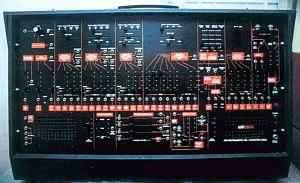
I pretty much run everything through my 2600´s filter. Sometimes to create dramatic modulations to an external source that would otherwise have been ordinary , or just subtle treatments that add character , and make it sound oooold. There´s a certain magic to the 2600 in that sense , I mean I´ve worked with other filter treatment gadgets/synths and they all do more or less the same thing , but a sound that travels through the mysterious innards of the ARP becomes....interesting and organic , sort of like the sound quality in a 60´s-70´s film. And as a synthesizer in itself , you just gotta love the ARP sound. I started out with Axxes , then went to the Odyssey , and finally got hold of a grey meanie 2600.
They don´t come cheap these days , but trust me they´re worth it no matter what style of music you´re into. The 2600 begs you to do experimental stuff with it , but you can also patch up a classic lead/bass/whathaveyou in no time. Or without patchcords for that matter since it´s semimodular. Like any modular of this size you can surprise yourself every day with a new sound and a new dimension that you didn´t know about before. Modulate everything with anything to get sounds that vibrate and live. I have yet to hear any virtual (like the Nordmod) sound like this. To my ears they´re just flat and clinical , but I won´t go there...
My only gripes would be the sometimes clicking filter in high resonant positions , and also the envelopes are a bit...well , I could have used two ADSR´s instead of one of them being just an AR , but that´s ARP for you.
The older 2600´s with the 4012 filter are supposed to sound beefier than the later ones. I myself have never tried out the newer ones , so I can´t be the judge of that. I´m just happy I got a 4012 one...except for the fact that its modules are epoxied.
The 2600 is the ultimate modular to start out with , as it´s so logically laid out both visually and technically. As someone pointed out , there´s the Devarahi book with the 2600 section. However , he doesn´t actually dig too deep into its possibilites. A nice book it is though. Make sure you get the manuals and patchbook if you want to fully understand what´s going on. I had a constantly frowned forehead before I got some copies from the netking of manuals-Mark Glinsky. Having the 1v/oct makes it easy to expand the 2600 with whatever you feel the need for as time goes by. Doepfers , MOTM modules or older systems like the Roland 100m. Anyway , make no mistake , this is one of the true classics in both sound and flexibility.
|