|
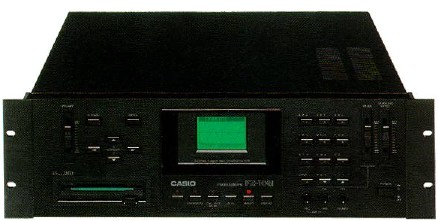
I bought one of these in 1988 and used it solidly for many years. The sound quality is definitely superior to the Akai S900/950 - you can hear the higher resolution in the clarity of the sound (16 bit vs. 12 bit). It has another *huge* advantage over the Akai S900/950 (and even the S1000) - the Casio's filters have resonance (this was only implemented on Akai models with the S3000, about six years later. Without resonance on a filter you can't make those squidgy filter effects (try doing it on an older Akai, the sound just goes from bright to dull in a feeble way).
Other good points:
The large LCD (good for editing samples - not implemented on Akai machines until the S1000 but even then not as good as the Casio. The Casio waveform display looks like a miniature version of a computer display not the S1000/3000's confusing succession of dots).
User interface is logical and easy to understand (well I think it is).
Bad points:
Output level is on the low side so you have to bring up the mixer gain to get a decent level of signal. Make sure you sample your sounds at a good level, not too quiet, otherwise you will exacerbate this problem. But watch the meters carefully - it's easy to overdo it and distort the incoming sound.
Envelopes are a little slow. Getting sounds to cut off in a crisp, clipped way requires you to make notes very short in your sequencer (or shorten the sounds themselves by editing the sample end point). This is if you want clipped, short drum sounds eg for garage or drum & bass.
No headphone socket. Not a problem if you're running it into a mixer.
LCD backlight fades with time. It can be replaced but I think it's quite expensive.
Manual not as helpful as it could be. It will all make sense if you've used samplers before, but perhaps not if you're completely new to the game.
|